
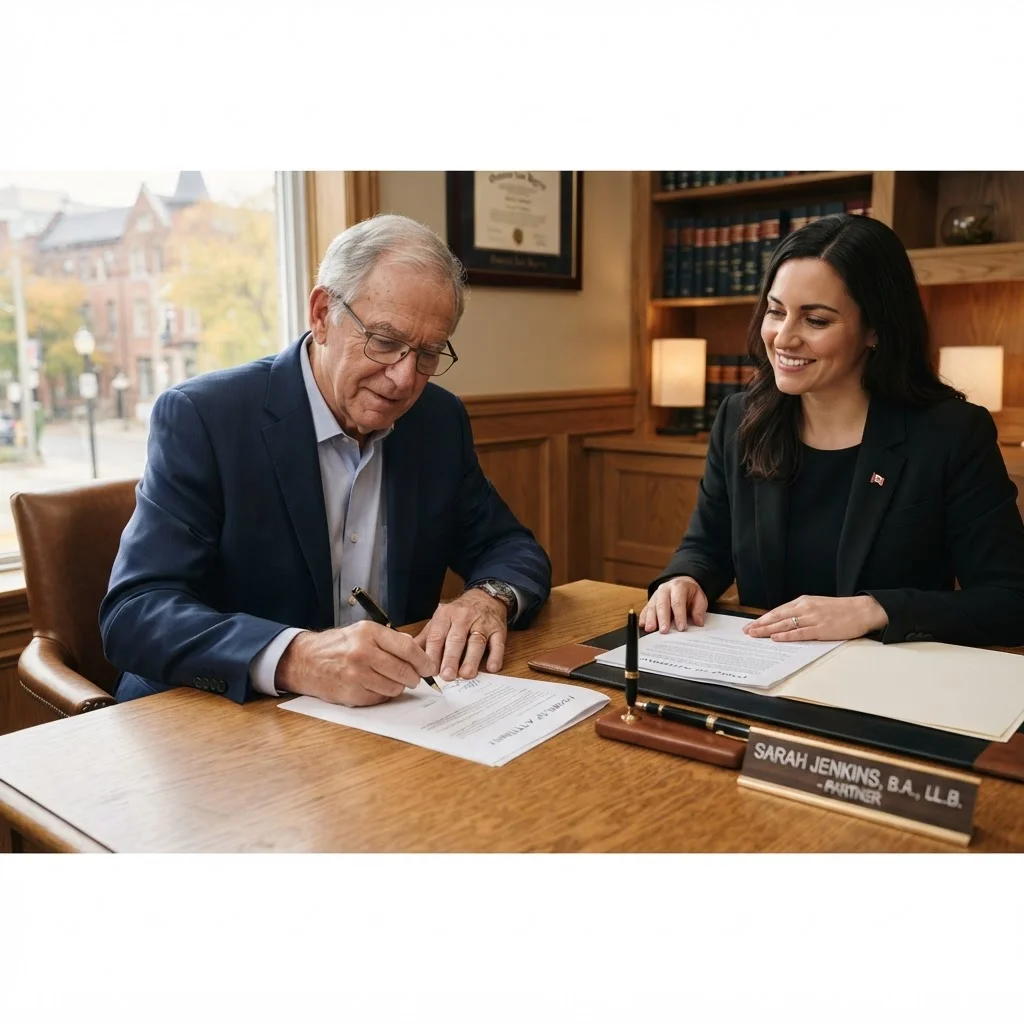
Most people focus on their will. They think of estate planning as planning for death. But there's a document that matters just as much — possibly more — that protects you while you're still alive.
An enduring power of attorney (EPOA) is one of the most important legal documents a Canadian adult can have. And most people don't have one.
What Is a Power of Attorney?
A power of attorney is a legal document in which you authorize another person — called your attorney, or in some provinces your agent — to make decisions on your behalf. There are different types, but the one that matters most for estate planning is the enduring power of attorney.
"Enduring" means the authority continues — or endures — even if you lose mental capacity. A standard power of attorney would automatically terminate if you became incapacitated. An enduring power of attorney is specifically designed for that scenario.
What It Actually Covers
An enduring power of attorney covers your financial and legal affairs:
- Managing your bank accounts and investments
- Paying your bills and mortgage
- Managing your real estate
- Filing your taxes
- Managing your business interests
- Accessing financial accounts to fund your care
It does not cover personal care and healthcare decisions — those are handled by a separate document (called a Personal Directive in Alberta, a Power of Attorney for Personal Care in Ontario, a Representation Agreement in BC).
What Happens Without One
If you become incapacitated — through illness, injury, or cognitive decline — and you don't have an enduring power of attorney, no one can legally manage your financial affairs without a court order.
Your spouse, your children, your closest family members — none of them can access your accounts, pay your bills from your assets, or manage your property. They must apply to a court for an order of trusteeship or guardianship. This process takes months, costs thousands in legal fees, and is emotionally draining for families who are already dealing with a health crisis.
It is also entirely avoidable.
The Terminology Varies by Province
Canada's power of attorney legislation is provincial, which means the terminology and specific requirements differ depending on where you live:
- Alberta: Enduring Power of Attorney (governed by the Powers of Attorney Act)
- Ontario: Continuing Power of Attorney for Property (governed by the Substitute Decisions Act)
- British Columbia: Enduring Power of Attorney (governed by the Power of Attorney Act)
- Nova Scotia: Enduring Power of Attorney
- Manitoba, Saskatchewan, New Brunswick: Enduring Power of Attorney or Power of Attorney for Property
Different names, same essential function. The document you need — regardless of what your province calls it — authorizes a trusted person to manage your finances if you can't.
Choosing Your Attorney
Your attorney doesn't have to be a lawyer — the terminology is confusing. Your attorney under an EPOA is simply the person you trust to manage your affairs. This is usually a spouse, adult child, or close friend.
The most important criteria:
- Trustworthy. This person will have broad authority over your finances. Choose someone with integrity and good judgment.
- Organized and available. Managing someone's finances is a real administrative responsibility. Your attorney needs to be capable of doing it.
- Not a conflict of interest. In most provinces, your attorney cannot witness your EPOA — and some restrictions apply to people who might benefit from your estate.
When Should You Get One?
Now. The EPOA must be created while you have mental capacity — that's a legal requirement, not a suggestion. If you wait until cognitive decline has started, it may be too late to create a valid document. Once incapacity is established, the only option is a court process.
This is one of the few legal situations where waiting carries a hard deadline.
How It's Done at Wills Made Easy
At every Wills Made Easy appointment, your enduring power of attorney is prepared alongside your will and healthcare directive. It's included in the flat rate — $395 individual, $495 couple. The whole package, in one hour, executed correctly by a licensed professional.
Enduring Power of Attorney vs. Regular Power of Attorney
There's an important distinction that many Canadians miss. A regular (or "general") power of attorney becomes invalid if you lose mental capacity. An enduring power of attorney — sometimes called a continuing power of attorney — specifically remains valid even if you become incapacitated. This is the critical difference.
If you only have a regular power of attorney and you lose capacity (through stroke, dementia, or accident), your family would need to apply to the court for adult guardianship or trusteeship to manage your affairs. That process takes months, costs thousands of dollars, and removes family choice — the court decides who manages your money, not you.
Whether you need a power of attorney in Toronto or a power of attorney in Vancouver, an enduring power of attorney avoids all of this. You choose who acts for you, and that person can step in immediately if needed — no court involvement, no delay, no extra legal costs.
How to Choose Your Attorney
Your attorney (the person you appoint under your power of attorney) has significant power over your finances. Choose someone who is trustworthy, organized, and comfortable with financial matters. Most Canadians name their spouse, an adult child, or a trusted family member. You can also appoint a professional trustee, though this comes with fees.
Consider naming an alternate attorney in case your first choice is unable or unwilling to act. And discuss your decision with the person you've chosen — managing someone's financial affairs is a significant responsibility, and they should be prepared for it.