
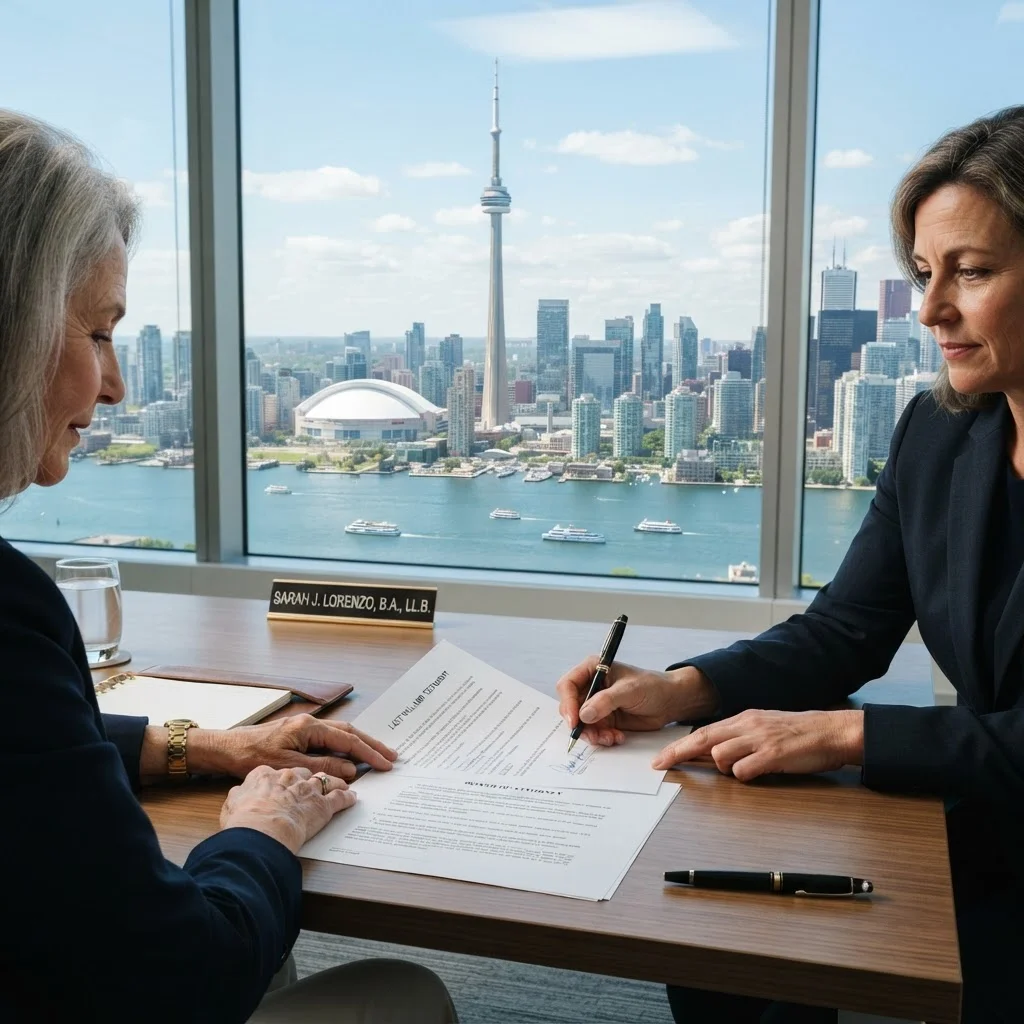
Ontario is home to more than 14 million people — and the majority of them don't have a will. The province's estate planning legislation, the Succession Law Reform Act (SLRA), has governed wills in Ontario for decades. It's a functional statute, but it's also one of the stricter frameworks in Canada when it comes to formal requirements. A will that doesn't meet its rules is void — regardless of how clear your intentions were.
Here's what every Ontario resident needs to know.
Who Can Make a Will in Ontario?
Under the SLRA, you can make a valid will in Ontario if you are:
- 18 years of age or older, or
- Under 18 and legally married, or
- A member of the Canadian Armed Forces on active service
You must also have testamentary capacity — you understand what a will does, what you own, who your natural heirs are, and that you're making binding decisions about your estate. A licensed legal professional assesses capacity as part of any will appointment.
What Makes a Will Legal in Ontario?
Ontario recognizes two types of valid wills:
Formal (Attested) Wills
The most common type. To be valid, a formal will must:
- Be in writing
- Be signed at the end by the will-maker (or by someone else at their direction, in their presence)
- Be signed in the presence of two witnesses who are both present at the same time
- Be signed by both witnesses in the presence of the will-maker
Witnesses cannot be beneficiaries. Unlike some provinces, Ontario does not void the entire will if a witness is a beneficiary — but the gift to that witness is void. Their spouse is also disqualified from receiving a gift if they were a witness.
Holograph Wills
A holograph will is entirely handwritten and signed by the will-maker — no witnesses required. Ontario is one of the few provinces that recognizes holograph wills as legally valid under Section 6 of the SLRA.
This sounds convenient, but holograph wills are risky in practice. They're easy to challenge, easy to misinterpret, and easy to draft incorrectly. A handwritten will that contains ambiguous language, incomplete clauses, or missing executor appointments can result in costly court proceedings. Courts regularly see holograph wills that were clearly well-intentioned and completely unenforceable.
For most people, a properly prepared and witnessed formal will is the right choice — not because the law requires it, but because it protects your intentions.
What Happens If You Die Without a Will in Ontario?
Dying without a will in Ontario means your estate is governed by the SLRA's intestacy provisions — a formula that distributes your assets based on family structure, not your wishes.
- Spouse only, no children: Your spouse inherits the entire estate.
- Spouse and children: Your spouse receives the first $350,000 (the "preferential share") plus one-half of the remainder if there is one child, or one-third if there are two or more children. Your children split the balance.
- No spouse, children only: Children inherit equally.
- No spouse, no children: Estate passes to parents, then siblings, then more distant relatives.
- No surviving relatives: The estate escheats — it passes to the Ontario government.
Ontario's Strict Rule on Common-Law Partners
This is one of the most important distinctions in Ontario estate law — and one that catches people off guard.
Common-law partners have zero automatic inheritance rights under Ontario's intestacy rules, regardless of how long you've been together. If you've lived with your partner for 20 years, are not legally married, and die without a will, your partner inherits nothing under the SLRA. Your estate passes to blood relatives instead — potentially people you have little or no relationship with.
This is dramatically different from British Columbia — and if you need a will in Toronto or a will in Ottawa, the same Ontario rules apply or more years have the same intestacy rights as married spouses. Ontario has no equivalent provision.
If you're in a common-law relationship in Ontario, a will is not optional — it's the only legal mechanism that protects your partner.
Marriage, Divorce, and Your Existing Will
Ontario has specific rules about how major life events affect a will:
- Getting married no longer revokes an existing will in Ontario. As of January 1, 2022, amendments to the Succession Law Reform Act abolished the automatic revocation rule — your will remains valid after marriage. (Previously, marriage automatically revoked a will unless it was made in contemplation of that marriage.)
- Getting divorced does not revoke the will, but it does revoke any gifts and appointments given to your former spouse under it. They are treated as if they predeceased you.
- Separation without divorce may now affect your will in Ontario. As of January 1, 2025, amendments to the SLRA provide that a separated spouse may no longer inherit under a will or intestacy if you were living separate and apart for at least three years due to marriage breakdown, or had a signed separation agreement, court order, or family arbitration award. Any gifts or appointments made to the separated spouse in a will predating the separation are also revoked. This brings separated spouses closer to the treatment of divorced spouses, who already had no inheritance rights.
These rules mean that life changes are will-update triggers — not optional reminders.
Powers of Attorney in Ontario: Two Separate Documents
Ontario requires two distinct documents to cover incapacity — one for finances, one for healthcare:
Continuing Power of Attorney for Property
Authorizes your attorney (not a lawyer — the person you appoint) to manage your financial and legal affairs if you become incapable. "Continuing" means it remains valid even after you lose capacity — unlike a regular power of attorney, which terminates at incapacity.
It must be signed in front of two witnesses who are not your spouse, partner, child, attorney, or the attorney's spouse. Without one, your family may need to apply to the Ontario Capacity Office and then the courts for a guardianship order — a process that can take months and cost thousands.
Power of Attorney for Personal Care
Authorizes your attorney to make healthcare, housing, and personal care decisions on your behalf if you're unable to make them yourself. In other provinces this is called a Personal Directive or Representation Agreement — in Ontario it's a Power of Attorney for Personal Care.
Without one, healthcare providers follow the default substitute decision-maker hierarchy set by the Health Care Consent Act — which may not put the right person in charge of your care.
The Three Documents Every Ontario Resident Needs
- A legal will — who inherits your estate, who manages it, and who raises your children
- A Continuing Power of Attorney for Property — who manages your finances and legal affairs during incapacity
- A Power of Attorney for Personal Care — who makes your healthcare and end-of-life decisions
A will alone is not a complete estate plan. It only takes effect after death. The two Powers of Attorney cover the period when you're alive but incapacitated — which can be just as critical for your family.
Getting It Done in Ontario
Wills Made Easy is expanding across Ontario. When available in your city, a licensed legal professional prepares and executes all three documents — will, Continuing Power of Attorney for Property, and Power of Attorney for Personal Care — in a single one-hour appointment at a flat rate: $395 for an individual, $495 for a couple.
No hourly billing. No retainers. No surprises. Join the waitlist for your city and we'll notify you when appointments open near you.