
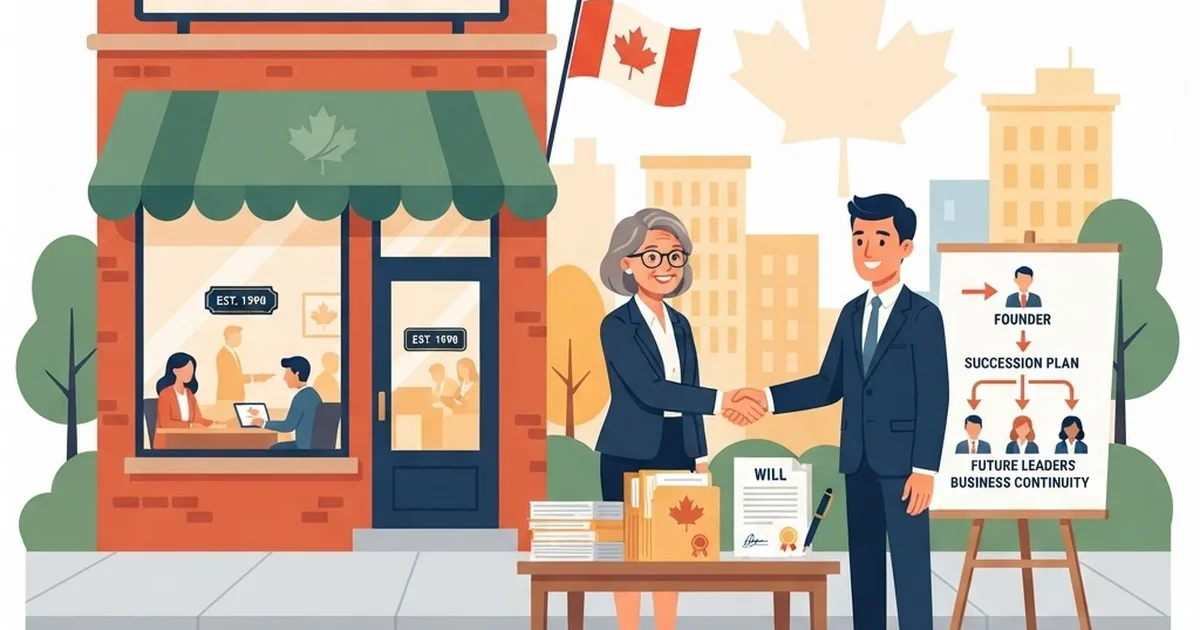
For most Canadian business owners, the business is not just their largest asset — it is their livelihood, their identity, and their family's financial future. Yet estate planning for business assets is consistently the most overlooked area of Canadian estate planning.
What Happens to Your Business When You Die?
Sole Proprietorship
The business is not a separate legal entity. Assets become part of your estate, business debts must be paid from the estate, and deemed disposition may trigger capital gains tax. Without a succession plan, a sole proprietorship usually dies with the owner.
Partnership
Without a partnership agreement with buy-sell provisions, the partnership may dissolve, and your surviving partner may need to buy out your estate's share — which can require liquidating business assets. A well-drafted partnership agreement is essential.
Corporation
Shares pass through your will. The corporation continues, but whoever inherits the shares controls the company. Deemed disposition applies — capital gains tax may be significant. A shareholders' agreement should govern what happens to shares on death.
The Tax Problem: Deemed Disposition
When you die, the CRA treats you as if you sold all assets at fair market value. For a business that has grown significantly, this can mean hundreds of thousands in tax before any distribution to beneficiaries.
Strategies to Reduce Business Estate Tax
- Lifetime Capital Gains Exemption (LCGE): ~$1.25 million per individual for Qualified Small Business Corporation shares
- Estate freeze: Caps your tax liability at current value, shifts future growth to next generation
- Spousal rollover: Transfers to spouse are tax-deferred
- Multiple wills: Separate wills for corporate shares (not probated) and personal assets
- Corporate-owned life insurance: Tax-free funds to redeem shares or pay tax liability
Succession Planning: Who Takes Over?
Family Succession
Start early. Which child takes over? How will non-involved children be treated? How will the transition be phased? Equalizing the estate with non-business assets can prevent resentment.
Sale to a Third Party
If no family successor exists, the will should allow the executor to sell. Is the business dependent on your personal relationships? Is there a key employee who could buy it?
The Documents You Need
- A will with specific business provisions (authority to sell, wind down, or transfer)
- A shareholders' agreement (if incorporated)
- A partnership agreement (if in a partnership)
- A power of attorney with business management provisions
- Life insurance to cover tax liability or fund a buy-out
Start Now, Not Later
The most effective strategies — estate freezes, LCGE qualification, building a self-sufficient management team — require years of lead time. At Wills Made Easy, a licensed professional can help you create a will with business succession provisions. Find your city or check our flat-rate pricing.